
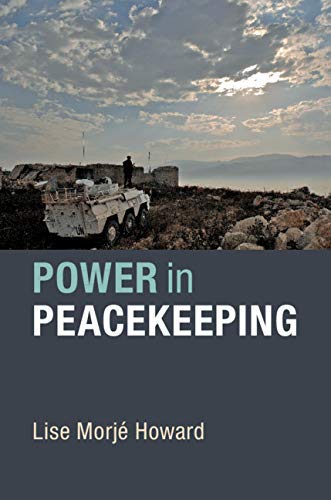
Power in Peacekeeping
Product details
| Management number | 231465028 | Release Date | 2026/06/18 | List Price | US$9.21 | Model Number | 231465028 | ||
|---|---|---|---|---|---|---|---|---|---|
| Category | |||||||||
United Nations peacekeeping has proven remarkably effective at reducing the death and destruction of civil wars. But how peacekeepers achieve their ends remains under-explored. This book presents a typological theory of how peacekeepers exercise power. If power is the ability of A to get B to behave differently, peacekeepers convince the peacekept to stop fighting in three basic ways: they persuade verbally, induce financially, and coerce through deterrence, surveillance and arrest. Based on more than two decades of study, interviews with peacekeepers, unpublished records on Namibia, and ethnographic observation of peacekeepers in Lebanon, DR Congo, and the Central African Republic, this book explains how peacekeepers achieve their goals, and differentiates peacekeeping from its less effective cousin, counterinsurgency. It recommends a new international division of labor, whereby actual military forces hone their effective use of compulsion, while UN peacekeepers build on their strengths of persuasion, inducement, and coercion short of offensive force. Read more
| ASIN | B07PYY4MVX |
|---|---|
| XRay | Not Enabled |
| ISBN13 | 978-1108583985 |
| Language | English |
| File size | 3.8 MB |
| Page Flip | Enabled |
| Publisher | Cambridge University Press |
| Word Wise | Enabled |
| Print length | 268 pages |
| Accessibility | Learn more |
| Screen Reader | Supported |
| Publication date | May 16, 2019 |
| Enhanced typesetting | Enabled |
Bestseller ranking
Relations


Correction of product information
If you notice any omissions or errors in the product information on this page, please use the correction request form below.
Correction Request Form